Showing posts with label Cairo. Show all posts

Tuesday, August 22, 2017

Korean film festival opens in Egypt

Visual Korea 2017 is held in Egypt in May.
By Korea.net Honorary Reporters Salwa Elzeny, Esraa Elzeny, Dina Khaled and Sara Khaled
Photos = Esraa Elzeny and Salwa Elzeny 

Everywhere in the world, cinemas are where people go to enjoy themselves. Cinema tells our stories and our lives, and as our lives vary, the stories of cinema can vary, too. Korean cinema suffered in the 1970s because of bureaucracy, censorship and the spread of television, but it made its way in the early 1990s with the emergence of a generation of talented young directors. During the 21st century, the film industry in Korea has undergone great development. Korean films have begun to be shown at international festivals, most notably Cannes, Berlin and Venice. The driving force behind the boom was government policies to promote movies and filmmaking. According to the strict quota system for first-run screens, each movie screen should display a Korean film for at least 73 days each year. Directors also receive support from the Korean Film Board, regional film commissions, local governments and international film festivals. In 2015, the number of films produced in Korea reached 232, compared with 57 films in 2000, while the number of theaters increased to 2,424 in all parts of the country, compared to 720 in 2000. According to the latest statistics, an average Korean moviegoer sees 4.22 movies per year in the cinema.

As part of the Korean government's keenness to promote Korean cinema and as a response to the passion of Egyptian fans for all things Korean, we are delighted to help organize this year's Korean Cinema Festival in cooperation with the Cultural Development Fund and the Cultural Palaces Authority.

"I hope that these cultural activities organized by the Korean Cultural Center in Egypt will strengthen the friendly relations and cooperation that exists between Seoul and Cairo across various fields, and promote understanding between our two friendly societies. I hope that the films will get your admiration and applause. Thank you very much."

Thus, Park Jae Yang, the media and cultural counselor at the Embassy of the Republic of Korea in Egypt and director of the Korean Cultural Center in Egypt, opened the Korean Cinema Festival, under the theme of "Visual Korea," at the Egyptian Opera House on May 17.

The Cairo Opera House is the main performing arts venue in Cairo. 

The Korean Cinema Festival was held at the Cairo Opera House, part of the National Cultural Center and the main performing arts venue in the Egyptian capital. The Korean Cinema Festival was held from May 14 to 17 and screened four popular Korean movies: "The Thieves" (도둑들) (2012), "No Breathing" (노 브레싱) (2013), "The Plan Man" (플랜맨) (2014) and "Welcome to Dongmakgol" (웰컴 투 동막골) (2005).

"The Thieves" was the first movie to be shown at the Korean Cinema Festival, on May 14. The movie was produced in 2012. It's a Korean heist film directed by Choi Dong-hoon and stars Kim Yoon-seok, Lee Jung-jae, Kim Hye-soo, Jun Ji-hyun and Kim Soo-hyun. With over 12.9 million ticket sales, this action-comedy is currently the fifth highest-grossing movie in Korean film history. The movie was filmed in Seoul, Busan, Macau and Hong Kong. "The Thieves" recorded the fifth highest single day opening of all time in Korea.  I think it's one of the most successful Korean film of all time.

The story was unpredictable and you can’t figure out what will happen next. It totally throws off the audience, including a lot of situations that teach us that things aren't always what they seem. That’s the effect of a perfect storyline that provides plenty of twists, turns and flashbacks as the story progresses. All in all, "The Thieves" is highly entertaining thanks to its mix of comedy, complex plot, excellent performances and, of course, the action scenes.
  
Brochures for the Korean Cinema Festival tell the audience about the event. 

Korean Ambassador in Egypt Yoon Soon-gu and Park Jae Yang, the media and cultural counselor, both attended the opening ceremony and watched with us the opening movie. They gave welcoming speeches for the people who came to the event. A lot of people showed an interest in this event. They were very glad to know that there will be a Korean movie festival in Egypt. They wrote a lot of good comments on the official Facebook profile of the Korean Cultural Center in Egypt. Moreover, on the first day of the festival, many people of various ages  attended the screenings. There were even some families that came together to enjoy the movies. As they all watched the movies, the audience interaction was really amazing. The audience was really absorbed in the movie and it was both laughing and clapping at various parts in the movie.

Posters for the four movies are on display at the film festival. 

After the screening of the movie "The Plan Man," a seminar was held attended by Egyptian cinematic critic Nader Adly, director Ashraf Al-Fayeq, and cinematic critic Andrew Mohsen, as well as the Korean cultural counselor. They discussed the role that Korean cinema and film has played in the dissemination of Korean soft power. They talked about how Korean movies have sprung up and spread around the world, and talked about the idea of  joint exchanges between the Egyptian and Korean companies in the field of filmmaking and directing. Some of the attendees commented on their desire to translate the films into Arabic, to make it easier for them to understand Korean films better. 

Egyptian director Ashraf Al-Fayeq (right), cinematic critic Nader Adly (second from right), the Korean cultural counselor, and cinematic critic Andrew Mohsen (left) talk with the audience. 

Some of the people asked the Korean cultural counselor to invite famous K-pop stars to Egypt and to hold concerts at the Egyptian Opera House or at the Pyramids Theater. They also asked that more Korean soap operas be broadcast, and asked that they be aired with Arabic subtitles, rather than being dubbed. They believe that dubbing kills the sense of "spirit" in the Korean soap operas.

On the flip side, they believe that subtitles help them to learn and understand the Korean language. Finally, the audience agreed that it would want to hold this festival each year and have more films every year. 

The Egyptian audience enjoy the Korean movies and the seminar afterward. 

Finally, the Korean Cinema Festival is not only held in the Egyptian capital. It also visited the historic city of Luxor from May 17 to 19 at the Luxor Culture Center. 

Hope to see you all next year. 
  
wisdom117@korea.kr

Sunday, July 30, 2017

Celebrating March 21 at KCC in Cairo

By Korea.net Honorary Reporters Amira Atteya and Roufida Abouelwafa
Photos = Roufida Abouelwafa

Another reason why we love the Korean Cultural Center in Egypt is that it represents the country we love, "Korea." It also hosts events that bond Korea deeply in the Cairo community and assures us of tying up both cultures together, showing respect for each other's beliefs, ideas and differences, and for creating a Korean experience flavored by Egyptian culture.

On March 21, the Korean Cultural Center in Egypt (KCC) hosted an event to celebrate Mother’s Day. Six lucky daughters and sons brought along their mothers to celebrate their day. Mother's Day is a day to appreciate their hard work, efforts and their unconditional love. Usually, the elder daughter plays the mother’s role and cooks a big meal for the family as they gather around to give the mother gifts like flowers, handbags, shoes or even makeup.

The event first started with some words form Mr. Park who welcomed the mothers and children to the KCC. He showed his appreciation to the mothers for choosing to spend their day in the company of the KCC.

Park Jae-yang is the director at the Korean Cultural Center in Egypt. He speaks on Mother's Day as a small girl plays around him.

After Mr. Park’s words, the guests were divided into teams where each mother and her family were stamped with a Korean tattoo and each had a special meaning.

This stamp symbolizes the word haengbok (행복), or 'happiness' in Korean. 

Later on, the guests were invited to take a tour and were introduced to the place where their children spend most of their time. They also took a look at the activities in which they participate.

Honorary Reporter Amira spends mother's day with her family at the KCC.

Afterward, it was cooking time. It was time for a competition where each team learned a Korean recipe and tried to show off their talents along with their family to make a perfect Korean dish, since food plays an important part on this day. 

Chef Ghada instructs the mothers how to make a perfect gimbap rice roll, hotteok sugar nut cakes and delicious soup guk recipes. 

Chef Ghada started out with a recipe for gimbap rice rolls, which was adjusted to suit Egyptian tastes. "It was a fun experience to cook something we weren't familiar with," said one of the mothers.

The chef then continued to make hotteok sugar nut cakes, a famous Korean sweet pancake. She added the filling that can be exchanged for any other Egyptian filling, like meat or cheese or even vegetables. It can also be used in Ramadan, the Muslim holy month, where mothers usually try to make new recipes  as appetizers.

The recipes were sealed with a delicious guk soup recipe. In the final judgment, Chef Ghada couldn't pick up a winner, as all the teams did well. They all showed tolerance, cooperation and had a lot of fun cooking very delicious well-decorated plates.

Gimbap rice rolls are always a favorite Korean recipe.

A day like that couldn’t pass without throwing some light on the common aspects that exist between mothers in Korea and Egypt, especially in past generations. In those generations, it was a common thing to be a stay-at-home mom, where mothers were required to spend much more time raising children, and were not free to give enough attention to their wanted career. It was as if they had to dedicate their life to providing for their children with care and attention.

The children’s sake was their top priority, and sometimes their only job. Because of this sacrifice, they expected more from their children. That’s why in both countries you can see that pleasing your parents, cherishing them and sometimes fulfilling their dreams, is a common thing. That’s why on such a day as this we had to interview the mothers, to learn exactly what they expected from their children.

Here's the interview.

On such a day as Mother's Day, what do you think mothers wish for their children and expect from them?

I think every mother wishes to see her children do well in their life, achieve their dreams and make us proud because all the effort we have born would then mean something to see it fruitful.

Sometimes, parents and kids aren't on the same page because of different points of view. What do you think would be the best behavior for the kids to not upset their parents?

I think it's important that the child, no matter how old they may be, should share their thoughts, decisions and feelings with their parents, especially their mother. It's the one thing we truly want to feel, like we still have our place in his life, that our message isn't over. It's not about whose decision they're going to make, it's about doing what they want and never regretting it, because in the end their happiness is my happiness.

Wow. That was really touching. You have two small daughters. Do you know what the older one said when I asked her about what she wants to be in the future?

No, actually. I can’t tell because she changes her mind almost monthly about what she wants to be when she grows up."

I think you'll be moved when you hear her answer. She said she wants to be anything that will make you proud of her, because she wants you to be happy.

I am moved by that answer.

Finally, I want to thank you for your time. I hope you have enjoyed the day today, and I would love to take a photo of you with your girls.

'A mother is the truest friend we have, when trials heavy and sudden fall upon us; when adversity takes the place of prosperity; when friends who rejoice with us in our sunshine desert us; when trouble thickens around us, still will she cling to us, and endeavor by her kind precepts and counsels to dissipate the clouds of darkness, and cause peace to return to our hearts.' -- Washington Irving


wisdom117@korea.kr

Monday, June 5, 2017

Korean B-boys at Cairo opera house

The Expression Crew performs at the Cairo Opera House. 

By Korea.net Honorary Reporters Esraa Elzeny, Salwa Elzeny and Menna Allah Muhammad
Photos = Esraa Elzeny and Salwa Elzeny 

For the second time in less than a year, the Expression Crew has come back to Egypt to perform at the Cairo Opera House. However, this time the performance is a little different. This show was presented by the Expression Crew in collaboration with sand artist Kim Ha Jun. The show was wonderful, as is usual for Korean troupes, which are very distinctive in the field of breakdancing. The Expression Crew is the most popular breakdancing troupe in Korea and has been performing since 1992. They were the first Asian breakdancing troupe to win the Battle of the Year championship in 2002 and the first Korean B-boy team to perform in New York in 2006. They ranked first among Interpark`s tickets sales in September 2007. They were selected as the best performance of the year by the popular entertainment show "Starking" in 2009. They came in second in the World of Dance Korea 2016 competition. They were on the Hit the Stage talent show in 2016 and they won the grand prize at the Korea Hip Hop Festival in 2016.

Sand artist Kim Ha Jun's exceptional talent is for storytelling and that's reflected in his work. His impressive performance captivates the audience, as he brings still objects, like sand, to life. He is among the world's most well renowned live sand animation artists. His marionette show was very professional in terms of movements and in his choice of fantastic background music. The sand art show was also more impressive and was influenced by the audience's emotions. The show started with a welcome speech from Ambassador Yoon Sun Ju, the ambassador from the Republic of Korea in Cairo. Then the second part of the show began with the sand art show and then the marionette musical. Then followed the sand art collaboration show, and then the Expression Crew performance, which surprised the audience with a new and special show specifically for their Egyptian audience. The audience was admired by the performers for its love of Korea and for the fact that many audience members followed a lot of K-pop. After the show, we had an exclusive interview with the leader of the Expression Crew, Woosung Lee. 

Woosung Lee (second from left) poses for a photo with the Korea.net honorary reporters.

- When was the Expression Crew formed?

The Expression Crew was formed in 1992 . I started dancing when I was 14, so I've been dancing for 30 years now. I’m considered one of the oldest dancers in Korea, and the Expression Crew is one of the oldest dance troupes, too. However, every once in a while we still add more shows. In 2002, the Expression Crew won the best dance crew award in an East Asia competition, and we started the marionette show in 2008. It's been almost 11 years now. We always do shows that are sponsored, but that's special about the marionette show is that it’s done with love and the desire of the dancers to do it. It’s the act that the dancers have worked hardest for. They've made great efforts over the past 11 years. A lot of dancers all over the world make special acts, but the marionette dance is such a unique and different performance that we're considered the only troupe that performs it. Also, the most recent dancer to join our troupe, Hyun Joon, is one of the most famous dancers in Korea and is such a great addition to our team. 

- what do you think about the Egyptian audience?

When we came to Egypt last year  for the first time, we were impressed with how people here love and support us. We'[ve been in some Arab countries, like Abu Dhabi, Bahrain and Jordan and others, but I guess Egyptians like us the most because we really had fun last year. We wanted to come again and we did a special show just for Egyptian fans of the balloon dance. If you look it up on our YouTube channel, you'll find that's it’s specially made for Egypt.

- How much training is required to reach to this professional level? 

To be that professional, you have to cut out food and sleep, and practice all the rest of your time, but that was long ago. Now, we don’t need that much time, but we must control our body by staying healthy, never smoking and reducing our alcohol consumption.

- If any one of your fans is traveling to Korea, where can they see your shows?

Right now, most of our concerts are overseas, so if anyone is coming to Korea and we don’t have a show, we can give them a tour of our studio or they could watch us practice. Just send us a message on our Facebook profile.

- Breakdancing has spread all around the world. Why is Korea considered a hot spot for this new kind of dance? 

The reasons why Korea is superior in terms of breakdancing is that Koreans train a lot and consider it a job, but many other people just take breakdancing as a hobby.

- What words of advice could you give to someone who wants to be a professional dancer?

First, if you want to practice on your own terms, that won’t do. You have to practice all the time, whenever you can. You have to work hard to reach a certain level. You can't say, "I'll train three times a week and be professional." It doesn't work that way. Also, if you really want to be a breakdancer, you can't hate anyone. Now, people love us, but when we first started a lot of people said, "What's breakdancing?" You're going to be a gangster, so you have to show a positive image about what you do, even if people negatively criticize you. You have to be respectful and be a role model so people will accept you and love what you do. For example, I was very well known five years ago and people loved me. I started to be arrogant and then I had an accident that broke my back. I couldn’t move. Then I knew the value of being humble. I said, "The first thing I'm going to do when I recover is to work hard and change my attitude," and here I am.

At the end of the interview, Lee advised Korea.net to not only love K-pop but to also to love and follow breakdancing. 

It was really a wonderful show and the audience enjoyed it. It was really professional, and we hope to see it again!

Here are some videos from the show. We hope you enjoy it.


Here's a video from their first trip to Egypt. Enjoy!


wisdom117@korea.kr

Thursday, May 18, 2017

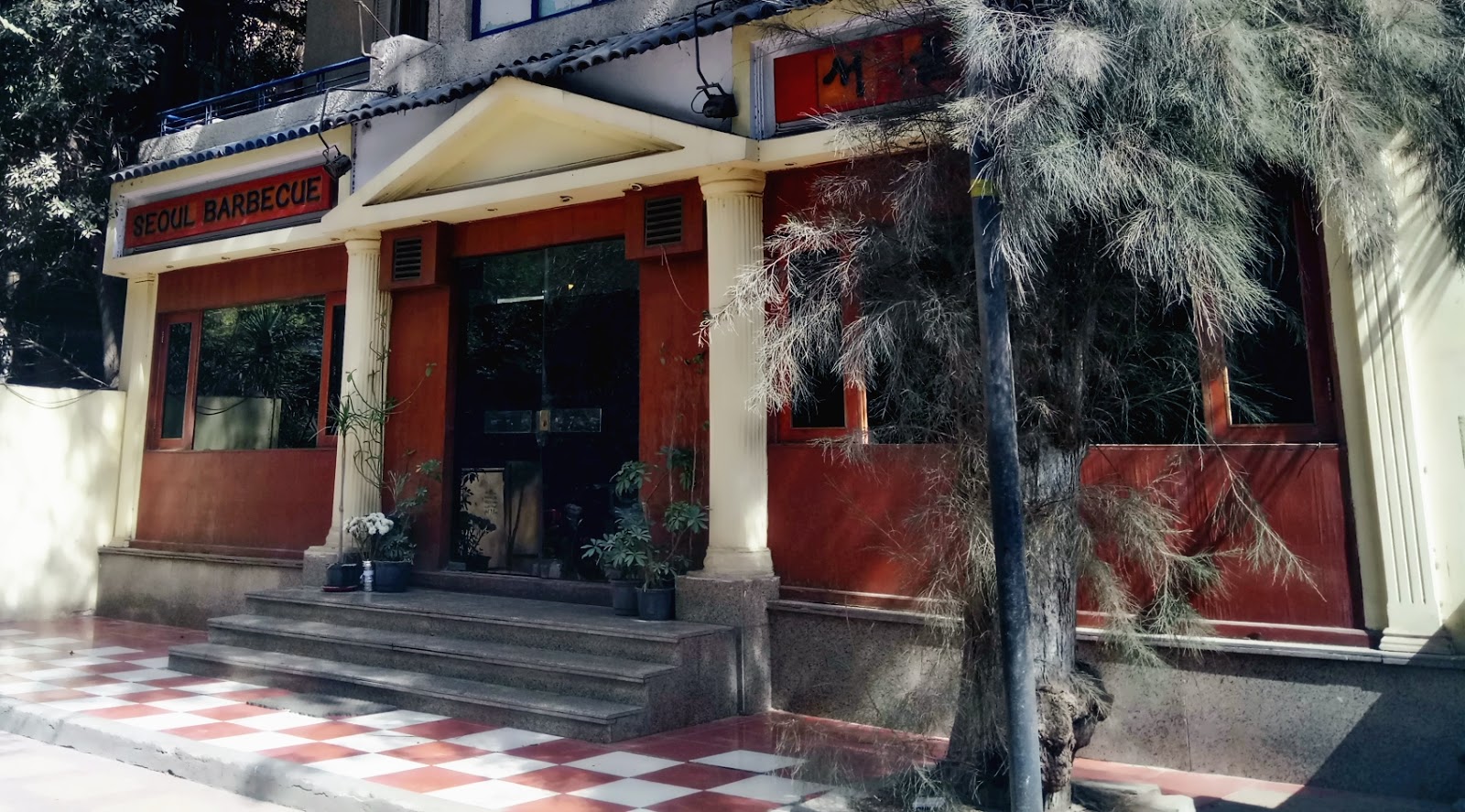
Seoul Barbecue: a must-visit eatery in Cairo

By Korea.net Honorary Reporter Nuran Sami 
Photos = Nuran Sami

As time passes and methods of transferring cultures develop, Korea gets increasingly planted into Egyptians' hearts. That which we used to consider strange at some point is now perceived solely for its true value, received with love and deeply-rooted respect. As Egyptians are pretty content with their cuisine, their acclaim for Korean flavors, though newly discovered, is noteworthy. Recently, I finished a phone call with the owner of a really distinguished Korean restaurant in Cairo to get further information about a special place that should be your eating destination next time you're in the Egyptian capital. 

Seoul Barbecue is the spot. This restaurant is located in Maadi, Cairo, and was founded 14 years ago, a while after the owner's other branch in Haram, Cairo, was launched 25 years ago. Seoul Barbecue's taste is truly authentic and identical to what you may taste in Korea. Kudos to the Korean chef who's responsible for preparing and monitoring how the food is done there, in accordance with the original Korean taste.


The place is nice and neat. It has a few Korean decorations and pictures hung on the wall, and a TV that always has KBS World turned on, whose target is international fans of Korean pop music, in order to satisfy the desires of the passionate K-pop lovers who come to the restaurant. 


The menu is well-varied. It has a diverse collection of Korea's most popular dishes and types that might cause a bit of culture shock to Egyptians in Korea, yet it's observable that Egyptian people tend to be really open about trying anything Korean in the sense of craving and belonging to the place they love the most. For instance, the cow tail soup and tongue meat sound very unfamiliar to Egyptians. Egyptian traditional cuisine, nature and habitual eating routines impose that. Yet, everything gets ordered since the prices are reasonable to a fair extent, based on Egypt's currency. The menu has a Chinese food section since that cuisine is widely admired in Egypt. There's a soup that's very close in taste to an Egyptian soup, which makes this section of the menu attractive to both Egyptian and Chinese people alike. Concerning the ingredients used, 80 percent of the culinary components are imported from Korea, and the other 20 percent is basically local vegetables.


It's a great choice for non-Egyptians who don't use Egypt's currency during their stay in Egypt to get groceries or day-to-day homemade meals. The prices are pretty similar to prices in Korea or the U.S. For example, a full-course meal like bibimbap costs EGP 95, which is equal to KRW 5,834 or USD 5. Korea's most popular alcoholic beverage, soju, is EGP 130 (USD 7), gimbap is EGP 50 (USD 2) and bulgogi is EGP 125 (USD 7). Seoul Barbecue offers six side dishes free-of-charge that vary between soybeans, mung bean pancakes, soybean sprouts, seasoned spicy spinach and cucumber salad, to name but a few. They can change from time to time, but the number is static. Free complimentary dishes or appetizers are rarely seen in Egypt's foreign or indigenous restaurants, so that's a plus. The best part relating to monetary concerns is that you only pay for what your order, there's no value-added tax (VAT) or implied tipping added to your bill. Tips are optional. 


The bill comes in a little box that seems pretty interesting to me. Thus, I asked the owner about it. It was the owner's idea, and the source of her inspiration is the fact that when Koreans come to Egypt, they usually buy souvenirs from Khan el-Khalili, a traditional market in Cairo that attracts a lot of tourists. Such souvenirs and bric-a-bracs are of historical and cultural heritage in Egypt. The boxes in which your bill comes look similar. In addition, she's come to notice that the most loved item by many diners is a handmade box. Therefore, she managed to simulate the original antique boxes in order to broaden clients' perspective, enhancing their love of Egypt by the functionality of this small tool, as a keepsake from Egypt. 

I have tried three dishes off the menu there so far: bibimbap, gimbap and tteokbokki. It was a very pleasant experience for me, so I decided to have an in-depth look into it and share it with all the Koreaphiles who come to Cairo! 


See you there.

wisdom117@korea.kr

Friday, April 21, 2017

Hanbok fashion show in Egypt

A range of modern and traditional Hanbok is on the stage during a Hanbok fashion show in Cairo on Oct. 22 last year. 

By Korea.net Honorary Reporters  Dina Khaled and Sara Khaled
Photos = Korean Cultural Center in Egypt

October is Hanbok Month in Egypt. On Oct. 22 last year, the first ever Hanbok fashion show in Egypt or the Middle East, showing off the great beauty of traditional Korean attire, was held at the Ramses Hilton hotel, one of Cairo’s top five-star hotels and organized by the Embassy of Korea in Cairo. My sister and I participated in the event as models for the Hanbok dresses. We learned a lot of new things about Hanbok and we had a lot of fun at the show. 

Hanbok is one of the key elements of Korean identity that distinguishes Korea from other countries around the world. Hanbok is a traditional form of clothes worn in Korea in the past. It symbolizes Korea. It's distinctly Korean and doesn’t look like any other type of clothing from anywhere else in the world. The beautiful Hanbok colors and patterns each symbolizes something that makes Hanbok a special thing to wear. Hanbok is really comfortable and practical to wear, too, more so than other countries' traditional forms of attire. We think Korean Hanbok would suit any person who wears it, whether they're skinny or fat, because Hanbok design is somehow loose and doesn’t restrain the body, making it suitable for anyone's body shape.

Hanbok attire differs according to sex, class, profession, social status and season. In general, there are two main components to Hanbok. For men, their Hanbok is composed of an upper jacket known as a jeogori (저고리) and a pair of pants known as a baji (바지). For women, their Hanbok is composed of the jeogori (저고리), which is a jacket, and the skirt known as a chima (치마). Over time, there have been slight changes to Hanbok in terms of materials, preferred colors, and the length of the skirt or jacket sleeves. Korea has done an amazing thing in keeping traditional attire updated until now. People in Korea still wear Hanbok on special occasions, like weddings, 61st birthdays, first birthdays and holidays.

Hanbok designer Ham Eun-jeong (center) poses for a photo with Korea.net Honorary Reporter Dina Khaled (right). 

Wearing a Hanbok dress is an awesome thing, but what’s even better is that the Hanbok dresses that we wore were designed by a professional and famous designer who came from Korea specifically for this show, designer Ham Eun-jeong. She’s really professional, as she designed various types of Hanbok, with beautiful complementary colors. Different types of Hanbok clothes were worn by different social strata and at different times: queen and king Hanbok, wedding Hanbok, gisaeng female entertainer (기생) Hanbok, 16th century Hanbok and today's modern Hanbok. One's clothes reflected the rich history and traditions of the people, and the colors and fabrics used to make Hanbok reflected the social status and the times of the person wearing it.

Designer Ham Eun-jeong worked on many of the Hanbok dresses recently on display in Cairo.

Differences between traditional Hanbok and modern Hanbok

As we were participating in this event, we learned that each color and pattern on a piece of Hanbok attire represents something. For example, the colors and fabric used to make a particular Hanbok reflect the social status of the person wearing it. Rich people wore Hanbok that was made of brightly colored silk and high-grade lightweight materials in the warm weather and of plain and patterned silks the rest of the year. Commoners wore Hanbok that was made of durable and inexpensive fabric, like hemp or cotton, in earth-toned colors. On the other hand, modern Hanbok ignores this distinction, and people of all social classes choose vibrant colors that appeal to them.

Hanbok colors are decided according to the "five colors theory," obangsaek in Korean (오방색). It refers to the theory of yin and yang and the "five elements" of metal, fire, wood, water and earth. The most popular colors reflect hues from nature, including jade green, indigo, white, red, blue, black and yellow. The color red symbolizes good fortune and wealth. Thus, it's often used for a woman’s wedding dress. The color black symbolizes infinity and the fountainhead of all creation. Black is often used for a man's hat. The color yellow can also represent the center of the universe, and it was often worn by royalty.

Jeong Sameul (left), director of the fashion show, poses for a photo with Korea.net Honorary Reporter Dina Khaled. 

Going on stage and modeling in a fashion show was a really amazing experience, but what’s even more amazing is to be trained by a professional director. He and his training team came all the way from Korea specifically to train us. Jeong Sameul, the director for this show, and his team were very diligent and kind, even though we were making many mistakes, as it was the very first fashion show for many of us. They were very patient and  trained us really well. The training lasted for three weeks as we learned not only how to walk on stage but also how to walk probably in Hanbok. We were divided into groups and each group learned a different walk according to the type of Hanbok and traditional social status of the wearer.

Some Hanbok designs from the 16th century are included in the recent Hanbok fashion show in Cairo. 
Son Hwa-young, assistant director for the fashion show, poses for a photo with Korea.net Honorary Reporter Sara Khaled. 


Egyptian media writes about the recent Hanbok fashion show. 

This was the first Hanbok fashion show in the Middle East, and it garnered a lot of attention from Egyptian magazines and newspapers. After the show, a lot of famous magazines and newspapers wrote about the event, talking about the beauty of Hanbok and fashion in general, and also numerous articles were written online about this event. Moreover, many famous Egyptian designers showed an interest in the event and attended it personally. They praised the beautiful and comfortable designs and they may add Hanbok elements to their future designs now. 

In "The Wonders of Korea," a promotional TV program produced and aired by KBS World, included on entire episode about Hanbok, episode seven, "Hanbok, the Art of Line & Color.” The show introduces all things Korean to the world, showing off its traditions and arts. This episode highlighted traditional Hanbok attire. It said that, “The key to Hanbok is the lines and the color combinations. In Western attire, there are usually two colors, one for the upper body and one for the lower body. This isn't the case with Hanbok. The skirt, jacket, ribbon and neckband are all different colors. Even with four different colors, however, harmony still exists. This works for two colors or even just one color.” We think this is really true.

wisdom117@korea.kr